

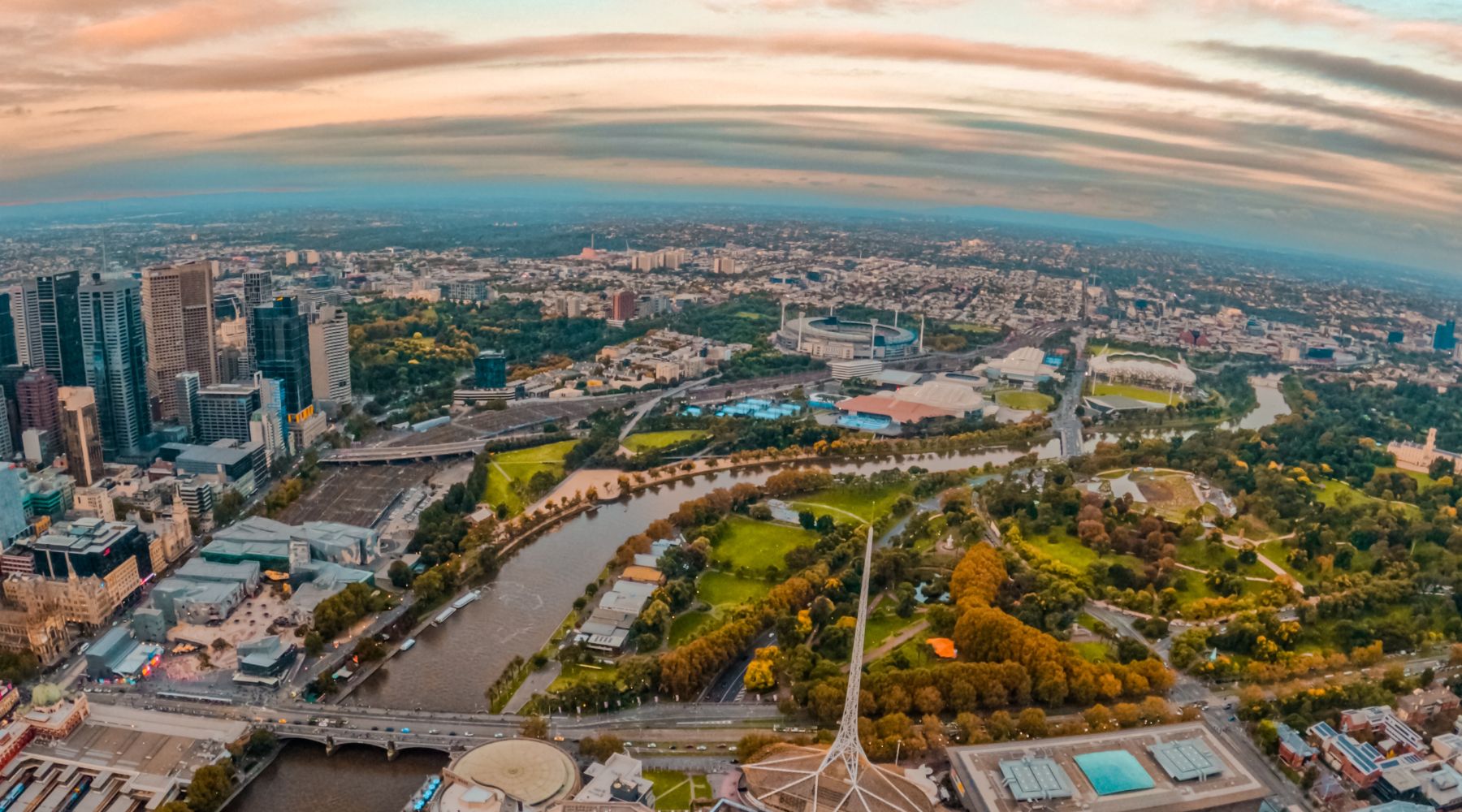
The Melbourne of today with its tram lines, skyscrapers and rooftop bars sits on a foundation built over 180 years ago. In the 1800s, this was a dusty colonial town on the edge of the empire. Now it’s a cultural capital. Here’s how it evolved, era by era.
The 1830s–50s: The Settler Grid
- 1837: The Hoddle Grid was laid out a framework that still defines the CBD
- Buildings were timber and bark huts, quickly replaced by brick shops and hotels
- Flinders Street was the commercial heart; Collins Street the fashion district
- Gold discovered in 1851 at Ballarat and Bendigo, setting off a population and wealth explosion
The 1860s–80s: Gold Rush & “Marvellous Melbourne”
- By the 1880s, Melbourne was the richest city in the British Empire
- Grand buildings like the Royal Exhibition Building and State Library were constructed
- Horse-drawn trams began running on major streets
- Boom-time speculation led to rapid expansion, especially in suburbs like Fitzroy, Carlton, and St Kilda
The 1890s Crash
- A property bubble burst; many banks collapsed
- Working-class areas grew while central Melbourne struggled
- The slums of Little Lonsdale became notorious
20th Century Growth
- Trams were electrified (1906), and cars introduced soon after
- Federation Square was still decades away; instead, there were factories along the Yarra
- Post-WWII migration reshaped the population Greeks, Italians, Vietnamese, Chinese, and more
- 1956: Melbourne hosted the Olympics boosting infrastructure and tourism
Now: The Global City
- From muddy tracks to skyscrapers like Australia 108 and Collins Arch
- From brick pits to cultural districts like Southbank
- From factory laneways to street art meccas like Hosier Lane
If you stood in 1880s Melbourne, you’d recognise many street names but the vibe would feel like a different planet.
