

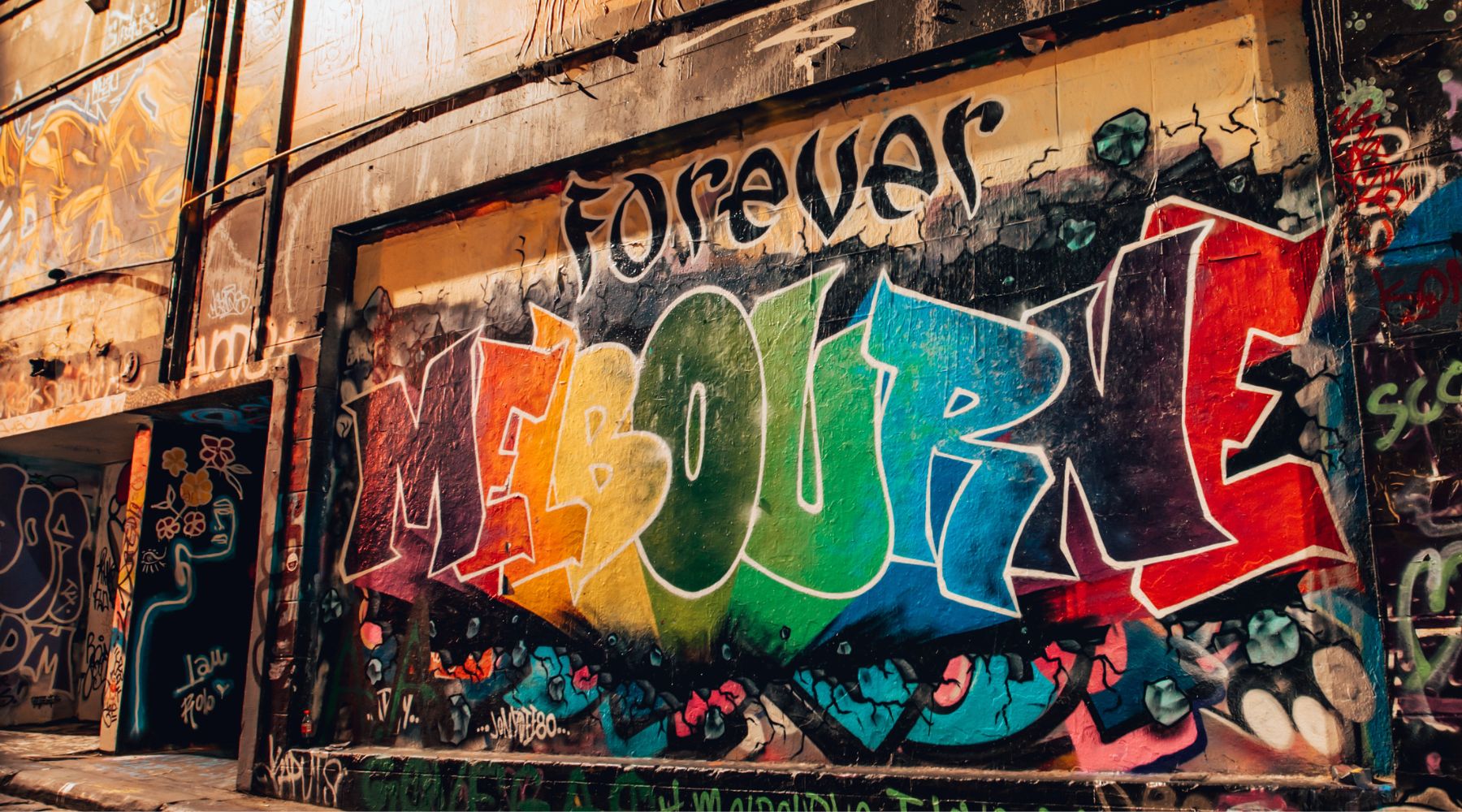
Today, Melbourne’s laneways are icons of cool full of street art, espresso bars, and boutique shops. But these narrow alleys weren’t always places you’d go for a Sunday stroll. Their history is one of urban evolution, commerce, crime and creativity.
Origins: Back Lanes and Service Roads
In the 1830s, Melbourne was laid out in what’s known as the Hoddle Grid, a tidy system of wide main streets and slim laneways in between.
- These laneways were never meant for the public they were access routes for horses, waste carts, and deliveries.
- They connected stables, warehouses, and the backs of shops. Many were unofficial or unnamed for decades.
Notable early-use laneways:
- Hardware Lane – was home to tool suppliers and ironmongers
- Tattersalls Lane – part of Melbourne’s Chinese quarter since the 1850s
- Duckboard Place – originally an army mess hall in WWII
Crime and Vice in the 19th Century
Laneways had a rough reputation in the late 1800s:
- Illegal betting, prostitution, and opium dens were common
- Some alleys, like Little Lon, were infamous for being red-light districts
- Police reports from the era describe narrow, dark lanes as hotbeds for urban crime
The 1990s Revival
By the 1980s, many laneways were lifeless and overlooked but that changed in the 1990s thanks to:
- A cultural push to revitalise public spaces
- Street art collectives turning grey walls into murals
- Pioneering businesses like Movida and Degraves Espresso showing that small, hidden venues could thrive
This period gave rise to:
- Centre Place, AC/DC Lane, Hosier Lane
- Pop-up galleries, hidden cocktail bars, boutique shopping
Now: A Symbol of Melbourne’s Identity
Melbourne’s laneways are now globally recognised for good reason:
- They’re legally protected by the City of Melbourne’s Laneways Policy
- Street art is encouraged in designated areas
- Urban historians and architects use them as case studies in adaptive city planning
You can take self-guided or professional Laneway Walking Tours, or just get lost and stumble upon a hidden gem.
